
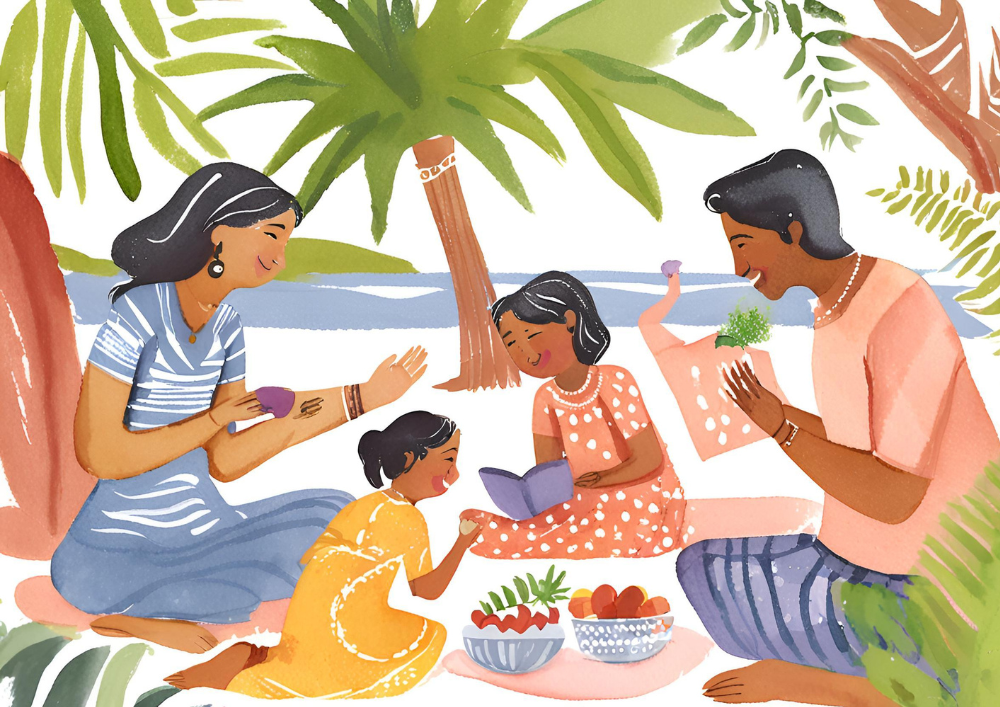
Parenting is a cornerstone of societal development, yet many families in the Maldives face challenges in balancing modern demands with effective family management. While specific local statistics on parenting stress are limited, global studies reveal that 70% of parents report feeling overwhelmed by work-family conflicts (UNICEF, 2023). In the Maldives, rapid urbanization and shifting cultural dynamics have amplified these pressures. For instance, a 2022 Ministry of Gender and Family survey highlighted that 60% of Maldivian parents struggle to dedicate quality time to their children due to economic obligations. This article explores the impacts of poor family management, identifies root causes, and proposes solutions tailored to the Maldivian context, while drawing parallels to global trends.
Three Key Challenges of Ineffective Family Management
- Time Poverty and Work-Family Imbalance
In the Maldives, where tourism and fisheries dominate the economy, many parents work long or irregular hours. This leaves little time for structured family activities, leading to fragmented parent-child relationships. Globally, the International Labour Organization (ILO) notes that 40% of working parents in developing nations face similar struggles. Consequences include diminished emotional bonding and delayed cognitive development in children, as observed in a 2023 UNICEF Maldives report on early childhood outcomes. - Lack of Access to Parental Education
Many Maldivian parents, particularly in rural atolls, lack exposure to modern parenting techniques. Traditional methods often prioritize discipline over emotional engagement, which can stifle a child’s creativity and mental well-being. A 2021 study by Malé-based NGO Family Health Society found that 45% of parents had never attended a parenting workshop. This gap mirrors global disparities, where low-resource communities often miss out on evidence-based parenting resources. - Cultural Shifts and Intergenerational Gaps
Rapid modernization has created a disconnect between traditional Maldivian family values and contemporary lifestyles. Youth exposed to global media may adopt behaviors that clash with parental expectations, fueling conflicts. For example, a 2023 survey by the Maldives National University revealed that 55% of adolescents feel misunderstood by their parents. Similar trends are seen in countries like Japan and India, where generational divides challenge family cohesion.
Proposed Solutions
- Government-Led Parenting Programs
The Maldivian government, in collaboration with NGOs could launch nationwide workshops on family management. Topics might include time management, positive communication, and stress reduction. For instance, Thailand’s “Smart Parents” initiative, which reduced parental stress by 30%, offers a replicable model. - Digital Resources for Remote Access
Developing a mobile app with localized content—such as short videos in Dhivehi on budgeting, meal planning, and conflict resolution—would empower parents in remote islands. Global platforms like Parenting for Lifelong Health (used in 15 countries) demonstrate the scalability of such tools. - Workplace Policies Supporting Families
Encouraging Maldivian employers to adopt family-friendly policies, such as flexible hours or on-site childcare, could alleviate time poverty. The Maldives could emulate Singapore’s “Work-Life Grant,” which subsidizes companies implementing such measures.
Conclusion
Effective family management is not just a personal responsibility but a societal imperative. In the Maldives, addressing time constraints, educational gaps, and cultural shifts requires collaborative efforts from policymakers, employers, and communities. By integrating global best practices with local cultural sensitivity, Maldivian families can foster nurturing environments that prepare children to thrive in a rapidly changing world. As the African proverb goes, “It takes a village to raise a child”—and in the Maldives, that village must unite to empower parents today for a stronger tomorrow.