
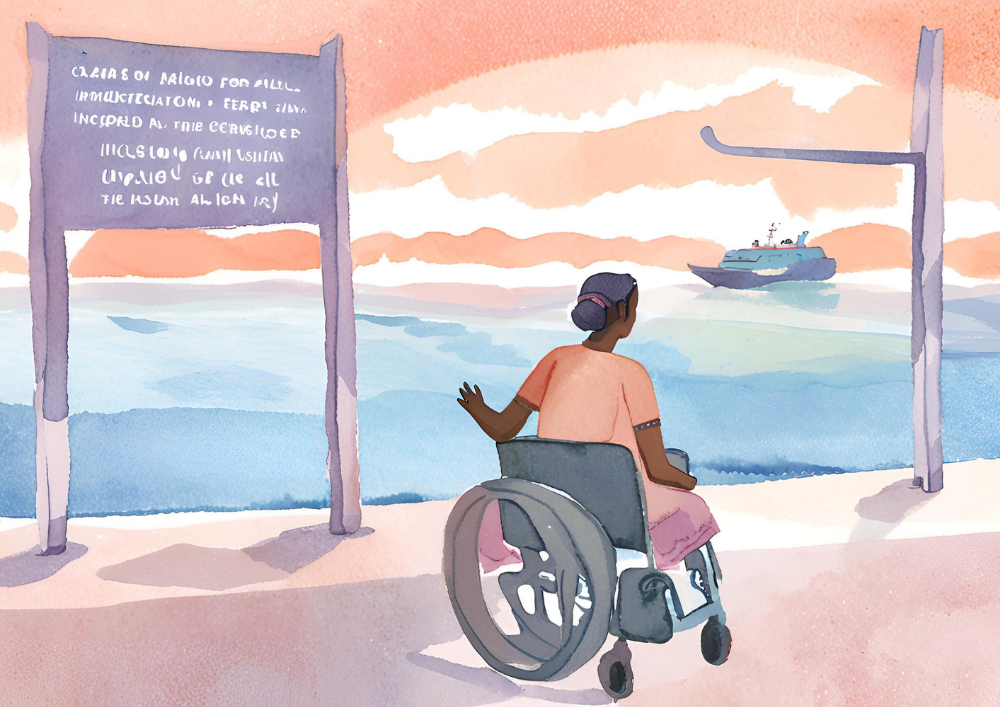
In the Maldives, an estimated 7,000 individuals live with disabilities, representing nearly 2% of the population (National Bureau of Statistics, 2023). Despite progress in recent years, many persons with disabilities still face systemic barriers to education, employment, and public participation. Globally, the World Health Organization (WHO) reports that over 1 billion people—15% of the world’s population—experience some form of disability, yet exclusion remains pervasive. In the Maldives, challenges such as inadequate infrastructure, societal stigma, and fragmented policies hinder full inclusion. This article examines the root causes of exclusion, its consequences, and actionable solutions to build a more inclusive society, aligned with both Maldivian values and global human rights frameworks.
Three Key Barriers to Inclusion
- Inaccessible Physical and Digital Infrastructure
Many public spaces, transportation systems, and government buildings in the Maldives lack ramps, elevators, or tactile pathways, isolating individuals with mobility or sensory impairments. For example, only 12% of Malé’s public facilities are fully wheelchair-accessible (Ministry of National Planning, 2022). Digital exclusion compounds this issue: websites and apps rarely comply with accessibility standards, shutting out those with visual or hearing disabilities. Globally, the UN notes that 90% of websites are inaccessible to people with disabilities, reflecting a widespread oversight. - Societal Stigma and Misconceptions
Deep-rooted cultural beliefs in the Maldives often equate disability with dependency or misfortune. A 2023 survey by the Maldivian Disability Council found that 65% of persons with disabilities experience discrimination in social settings. This stigma discourages families from advocating for inclusive education or employment opportunities. Similar trends exist in countries like India and Indonesia, where myths about disability perpetuate marginalization. - Gaps in Policy Implementation
While the Maldives ratified the UN Convention on the Rights of Persons with Disabilities (CRPD) in 2010, enforcement remains weak. Laws mandating accessibility or employment quotas are inconsistently applied. For instance, only 8% of Maldivian businesses meet the mandated 5% employment quota for persons with disabilities (Economic Development Ministry, 2023). This mirrors global challenges, where even progressive nations like Japan struggle with compliance despite robust legal frameworks.
Proposed Solutions
- Universal Design in Infrastructure Development
The government should enforce accessibility standards for all new public projects, inspired by Singapore’s “Building for All” guidelines. Retrofitting existing infrastructure—such as adding ramps to ferry terminals and captioning to public broadcasts—can bridge gaps. Partnerships with organizations like UNDP could fund these initiatives, ensuring alignment with the CRPD. - Nationwide Awareness Campaigns
Launch media campaigns featuring persons with disabilities as advocates, educators, and professionals to dismantle stereotypes. The “Inclusive Maldives” series itself could spotlight success stories, similar to Australia’s “Don’t DIS my ABILITY” campaign. Schools should integrate disability awareness into curricula to foster empathy from a young age. - Strengthening Legal Frameworks and Support Systems
Establish a dedicated Disability Rights Commission to monitor policy compliance and address grievances. Incentivize private-sector inclusion through tax breaks for companies meeting employment quotas, as seen in Germany’s “Integration Agreement” model. Additionally, expand vocational training programs in collaboration with NGOs like HANDICAP International to equip persons with disabilities for meaningful employment.
Conclusion
Creating an inclusive Maldives requires dismantling physical, social, and systemic barriers that marginalize persons with disabilities. By adopting universal design principles, challenging societal biases, and fortifying legal accountability, the nation can transform into a model of accessibility. Globally, countries like Rwanda and New Zealand demonstrate that inclusion is achievable with political will and community engagement. As the Maldivian proverb goes, “A society grows great when it plants trees under whose shade it will never sit.” By prioritizing disability rights today, the Maldives can ensure that no one is left in the shadows.